- the effects and influences of the
POLITICAL ENVIRONMENT

| GOV'T
INFLUENCE on TRADE
- the effects and influences of the POLITICAL ENVIRONMENT |
|
changes
last made to this page 2017 Sept 11
.
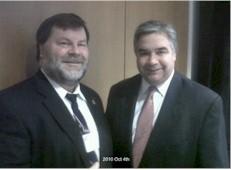 |
Prof. Tim Richardson with
the Hon. Peter Van Sloan Canadian federal Minister of International Trade 2010 Oct 4th
|
 |
Why does the
government get involved in business?
First - don't think of government as some anoymous entity of workers - think of government as
|
As government deals with politicians who want to "stay politicians", and government employees who want to keep ther jobs, one of the simple ways is to divide the discussion into
 |
Why
are Economic considerations so important?
Because the government needs money to pay for the programs and services that satisfy the population If the economy is bad, companies do not make much money - therefore the government cannot collect much corporate tax, and turn around and use that for things that people and businesses need In 2017, with increasing urbanization trends, large cities are more and more burdened to provide services - yet cities only revenue sources is basically "property tax", whereas te corporate tax companies pay goes to the federal government. |
Economic Rationales for Governmental Intervention
Non-Economic Rationales
for Governmental Intervention
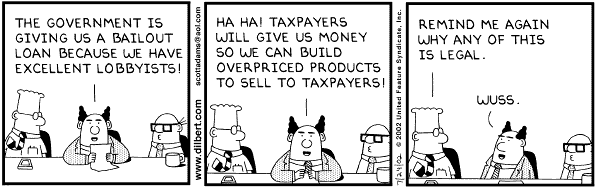
| COMMENT | The Dilbert cartoon is funny,
but the truth is many governments go to great lengths to support key industries
because it will allow them to compete internationally, which can have some
effects on the economy and sovereignty - depending on which sector and
how big the business.
WTGR |
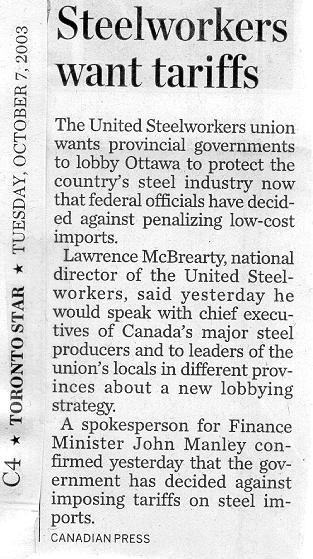 |
click on the scan to read
the larger article about how the Steelworkers want the government to launch
tariffs.
This is a part of the "Political Environment" because if the Steelworkers do not get tariffs they may go on strike, or they may work to make sure the local Member of Parliament is not re-elected in that constituency. If the governing party [in the case the liberals] really needs to hold that constituency they may give in. |
| KEY
POINTS |
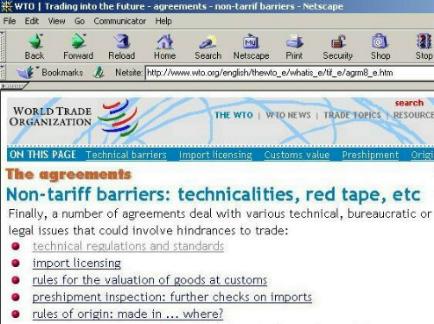
The WTO has become increasingly
involved in dealing with the "challenging" area of non-tariff barriers.
It is challenging because more and more countries are trying to show they
will abide by bi-lateral and multi-lateral trade agreements so they cut
tariffs - but at the same time, domestic political pressure cause the politicians
to think of ways they can erect non-tariff barriers to still keep out lower
priced foreign products, so that domestic industries can still sell competitively
to their citizens.
WTGR |
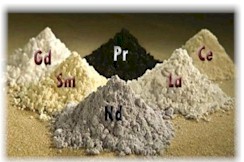
from http://www.rainharvest.co.za/2011/04/ the-importance-of-recycling-rare-earth-metals-and-minerals/ |
Rare Earth metals are 17
chemical elements in the periodic table. As named, these elements are very
rare, and some of them are used in the production of expensive high tech
devices.
A significant amount of these rare metals are found in Inner Mongolia (which is part of China since 1947). China is also one of the largest processors of the ore mined and the largest user of the material which ends up in various high tech devices. |
| Quotas
Export
|
As an Instrument
of Trade Control, Quotas can be used to restrict the quantity of imports
into a country.
Sometimes, to protect limited
resources, or for competitive advantage, quotas are also used for limited
quantities of exports.
"Environmental restrictions in countries such as Australia, Canada, and the United States have opened the way for China to become the world’s leading producer and exporter of rare earth metals"In 2010 the Chinese government instituted strict limitations on exporting rare earth metals. In 2009 China had exported 50,000 tons but in 2010, 2011 and 2012 this has been cut back to 30,000 tons "Many quickly concluded that the imposition of export quotas was an attempt by China to give its domestic manufacturers a cost advantage and to encourage foreign manufacturers to move more production to China so that they could get access to lower cost supplies of rare earths" |
| Quotas
Export
|
China's attempt to restrict the trade of rare earth metals, by using Export Quotas, has been struck down by the WTO. As
a result of the Chinese export quota "Prices soared by hundreds of percent,
leading the United States, European Union and Japan to complain that the
restrictions gave Chinese companies a competitive edge in such products
as hybrid car batteries, wind turbines and energy-efficient lighting."
|
 |
some of the
information about Quotas and part of the discussion of rare earth metals
comes from
Chpt 6 in Global Business Today 4th Canadian Edition Hill and McKaig published by McGraw-Hill Ryerson |
 |
Sept 2010
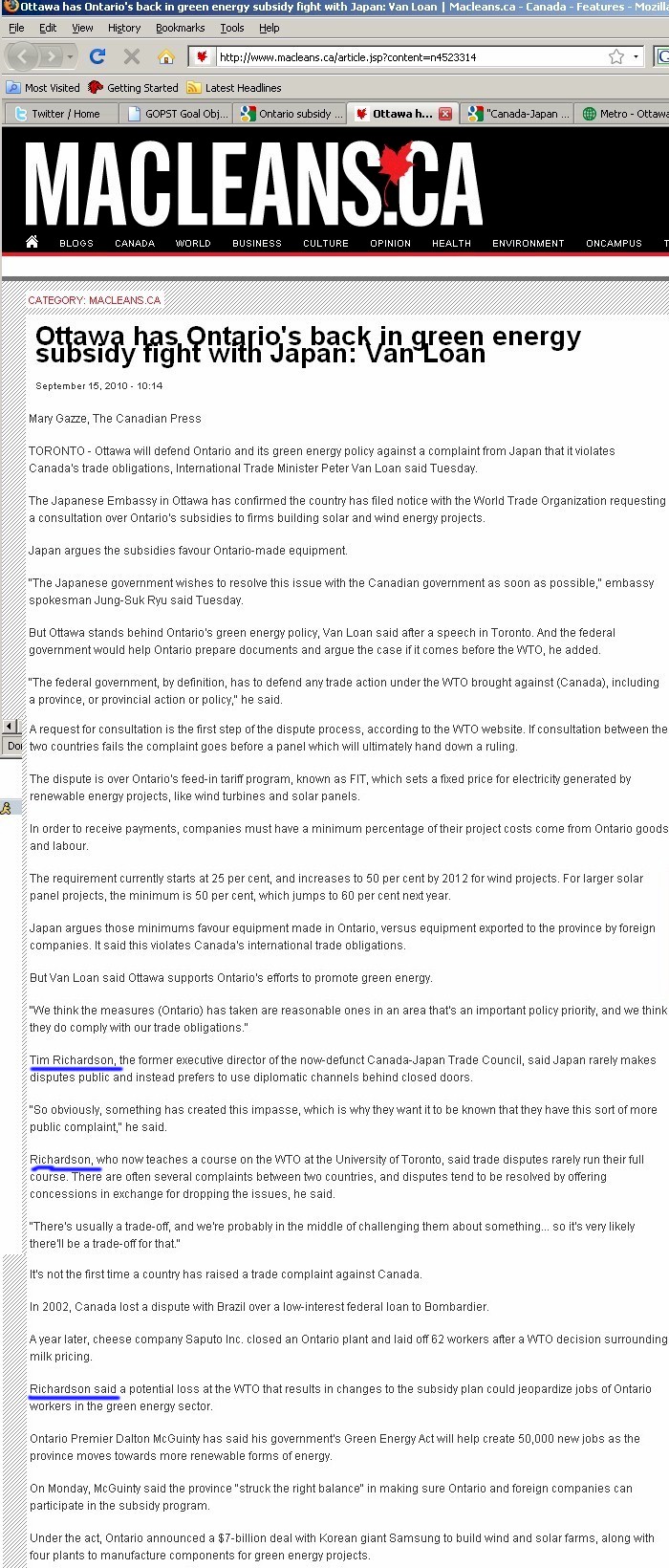
Prof. Richardson quoted at length in an interview given to CP about the trade friction created when the Japanese gov't complained to the WTO that Canada (province of Ontario) was unfairly restricting imports when the Ont. Gov't said companies receiving provincial money for the Green Energy Program must buy Green Energy products from Ontario based companies. Minister Van Loan said the
federal government must stand behind Ontario in this trade dispute.
|
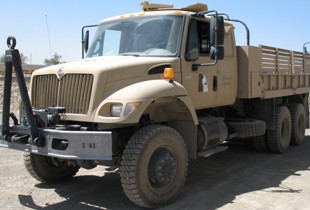
"Canadian Government Should
Buy Military Trucks Built in Canada, CAW Insists"
2009 January press release
by the Canadian Auto Workers union www.caw.ca/en/5371.htm
| The CAW points out that
"The Canadian government has awarded a $254 million contract to Navistar
to build the medium duty trucks for the Canadian Forces at its plant in
Texas."
In noting the Texas purchase, the CAW mentions "the federal government has lost sight that in 2003 they invested in the Chatham facility, by agreeing to provide over $30 million of assistance to Navistar to maintain these important jobs in the community and Ontario," Why buy the trucks from Navistar in Texas after giving $30 million to Navistar in Ontario?? |
 |
cc
 |
"Industry
calls for Buy Canada Rules"
2008 Feb 7 by Julian Beltrame for Canadian Press |
 |
In a position paper being released 1st week in February 2008, the Canadian Manufacturers and Exporters association is calling on all governments to act to help the manufacturing sector. |
| "Buy Canadian" | Beltrame, summarizing the CME paper for Canadian Press, says "Canada is among very few countries without "buy domestic" rules on taxpayer-funded projects, says there is urgency to address the matter because of the massive amounts – $33 billion in seven years from Ottawa alone – governments have committed to infrastructure projects such as roads, bridges and mass transit expansion." |
 |
July 2008
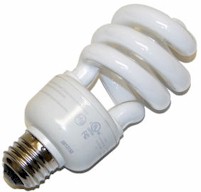
Europe's top retailers of lightbulbs have urged the European Union to drop the anti-dumping tariffs on Chinese-made energy-saving lightbulbs. The story, which originally ran in Reuters, explains that European shoppers find it ridiculous that they are being discouraged from buying reasonably priced energy saving lightbulbs because the the EU imposed anti-dumping duties of 66% on energy-saving lightbulbs from China. |
 |
In England
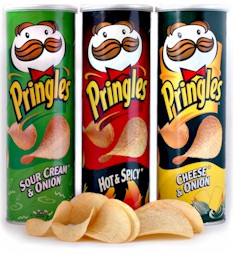
a British judge says "Pringles are not potato chips" which, results in them being able to be imported tax free" Apparently this ruling was made because Pringles do not fill the legal definition of "potato crisp" which is the English word for chips. Obviously this made the people at Pringles very happy because it made it more easy to sell their product in the U.K. at a lower price. UPDATE 2009 May
|
| Key Points | WTO rulings allow countries
to retaliate for situations in which an aggressor is proved to have violated
a WTO regulation. In March 2004 the WTO rules that the U.S. had not repealed
corporate tax breaks and this gave U.S. companies an unfair advantage in
doing business in competition with European companies, so the WTO allowed
the EU to put trade sanctions on American goods being imported into Europe.
The story carried by Reuters, was discussed in the Toronto Star
WTGR |
 |
 |
"EU Slaps
Trade Sanctions on U.S."
2004 March 2nd |
The move could cost U.S. companies $315 million (U.S.) this year in extra duties on exports to Europe and $666 million in 2005, unless Congress scraps the tax breaks. It is the first time the EU has levied trade sanctions on the United States since the World Trade Organization was formed in 1995.
The EU has promised to lift the sanctions as soon as the United States scraps the tax breaks. The U.S. Senate could begin action this week on legislation, but the outlook in the U.S. House is clouded. The disputed tax loopholes, valued at about $5 billion annually, help many U.S. exporters, including Boeing Co., Microsoft Corp. and Archer Daniels Midland Co.
EU Trade Commissioner Pascal
Lamy said the EU had "no choice" but to resort to the sanctions after the
United States missed a March 1 deadline for repealing the provisions. "Despite
waiting for more than two years, the U.S. has not brought its legislation
in line with WTO rules," Lamy said.
.
| Key Points | Although the United States
has not complied with the WTO legislation, it is reasonable to expect that
the members of Congress, who must pass legislation to repeal the subsidy,
will hesitate since the individual congressional members might be vulnerable
to being re-elected if jobs are lost as a result of some of the big U.S.
companies losing business.
This is a good example of how international business is effected by domestic politics. A proposed bill, to rectify the situation faces opposition from Democrats and some Republicans because of provisions they argue would encourage U.S. manufacturers to move jobs overseas. The upcoming U.S. elections [Nov 2004] mean this issue is very sensitive and it could mean that the U.S. govt will not take action to satisfy EU demands. WTGR |
 |
Some
comments WTGR posted on YouTube
youtube.com/watch?v=jV-d7r0J8HU May 2010 about how (1) Sometimes the actions of the federal government, through its embassies and consulates overseas, can have a negative effect on Canadians "back home" (2) Sometimes the rules and regulations of the federal government ministries can have a negative effect on the ability of exporters to sell certain products, such as processed and semi-processed food products. (3) Sometimes the rules and regulations of the provincial governments are used to protect key industries, and this makes importers in violation of certain laws |
.
| Canadian
federal government policy and practices which effect int'l trade |
1.
Sometimes the actions of the federal government, through its embassies
and consulates overseas, can have a negative effect on Canadians "back
home"
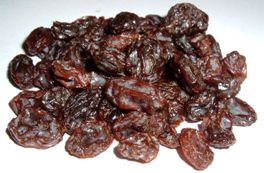
Adrian Humphreys wrote a great story on this Turkey/raisin situation in the National Post July 8th 2002 |

| Canadian
federal government policy and practices which effect int'l trade |
2.
Sometimes the rules and regulations of the federal government ministries
can have a negative effect on the ability of exporters to sell certain
products, such as processed and semi-processed food products
In 1987, Tim Richardson was
in Hong Kong as Manager of the International Trade Unit of the Canadian
Co-op Association. The CCA is a national association of co-operatives involved
in business on a national and international level. The purpose of the trip
was to meet with Hong Kong food products companies who might be interested
in importing processed and semi-processed food products from Canada.
|
| Canadian
federal government policy and practices which effect int'l trade |
3.
Sometimes the rules and regulations of the provincial governments are used
to protect key industries, and this makes importers in violation of certain
laws.
In November 2005, it was reported in the news that Quebec agriculture inspectors seized margarine from Wal-Mart stores in Quebec City !!
The Gazette reported that "Maxime Arseneau, agriculture critic for the Parti Quebecois, tabled a margarine tub in the National Assembly and charged that Unilever Canada Inc., which makes Becel, and Wal-Mart Stores Inc. Canada were conspiring to bring yellow margarine into the province. John Coyne, vice-president and general counsel [head lawyer] of Unilever Canada was quoted as saying "...from time to time, the wrong kind of margarine might be shipped to Quebec stores." |
|
|
CONTACT I MAIN PAGE I NEWS GALLERY I E-BIZ SHORTCUTS I INT'L BIZ SHORTCUTS I MKTG-BUSINESS SHORTCUTS I TEACHING SCHEDULE |
| . | |
MISTAKES
ITEXTS
USED I
IMAGES
I RANK
IDISCLAIMER
I STUDENT
CONTRIBUTORS I FORMER
STUDENTS I PUBLICATIONS
I TIPS
I  |
|
| . |
.