BUS106, BAM101
MRK460 and
IBM 600

updated 2020
June 10
|
for Seneca Students | this unit is taught in
BUS106, BAM101 MRK460 and IBM 600 |
 |
for UTSC Students | Students of Dr. P. Constantinou at UTSC, who teaches MGTC59 Management Ethics, will find that MGTC59 was a good background to many of the topics mentioned herein |  |
|
this web page
is refered to in the text
Global Human Resource Management in Global Business Today Hill, McKaig ... and Richardson |
.... |  |
 |
 |
| 2nd Edition | 3rd Edition | 4th Edition |
 |
this online
unit ethics.htm includes material from
Chpt 3 Ethics in Business, 6th Canadian Edition Griffin, Ebert, Starke by Pearson, Prentice-Hall |
 |
this online
unit ethics.htm includes material from
Chpt 17 (used in MRK460 Jan-Apr 2012) in International Marketing 3rd Canadian Edition Cateora et al ISBN 0070136793 |
 |
this online
unit ethics.htm includes material from
Chpt 4 (used in BUS106 Sept-Dec 2013) in The Future of Business 4th Edition Authors qAlthouse, Allan and Hart; published by Nelson |
 |
This web page has audio clips - just click on the icon (like the one to the left) and you can hear Prof. Richardson's voice adding additional information to topics on the page. |  |
turn on your speakers to hear audio clips |
| INTRODUCTION | Ethical
Dilemmas and Social Responsibility
o bribery of foreign officials
An increasingly popular topic in International Business, which, if avoided, or hidden, can end up with your company on CNN or 60 Minutes. Some universities advocate a specific "ethics" course for business and management students because it is increasingly seen as a necessary part of the curriculum of business students. For
UTSC students, Prof. Andrew Stark teaches MANAGEMENT ETHICS, MGTC59 see
http://www.scar.utoronto.ca/~stark/mgtc59soutline.htm
|
| KEY POINTS | There
are a number of examples we can look at to discuss ethical topics in Canadian
International Business management - we will consider the case of
Being in a leadership position, as mining and exploration grows worldwide, has put Canadian companies in an economically advantageous situation. This success in mining has helped the Canadian economy, but the increasingly risky and challenging locations in which mining companies operate (all the safe places are mined out), create situations which necessarily include dealing with contentious ethical issues. These ethical issues involve Canadian mining and exploration companies who have to deal with regional politicians that expect certain financial “rewards” for facilitating mining developments, as well as labour and employment practices by local companies hired to develop the sites. WTGR |
...
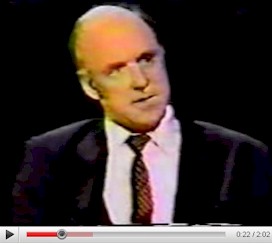 |
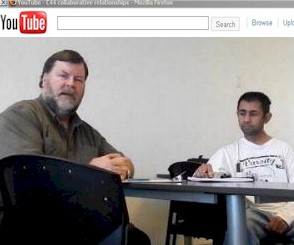
An amusing parody of a "news
interview" in which a corporate PR exec is questioned about an environmental
shipping disaster - the front fell off the ship.
The clip shows the absurd
way in which some executives respond to questions about ethics and the
environment.
also on YouTube
|
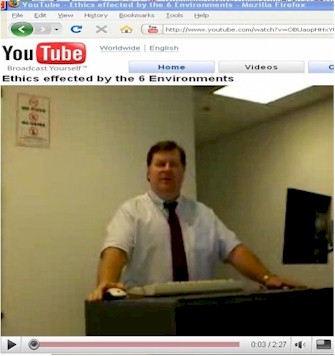 |
2008 Sept 24th
Prof. Richardson, with contributions from the BUS 106 class at Seneca College,
made a simple clip about how Ethics is influenced by the 6 environments.
The point is that ethics
cannot be discussed purely in a theoretical way, it has to be discussed
in the context of the "real world" which is "real" due to the influences
of the
on YouTube
|
Ethics, as effected by the “Environments”
The circumstances which effect Ethical considerations in the new millennium are circumstances caused by drastic changes in the
There has always been
pressure on companies to behave ethically, but in years past this pressure
was not so intense as it is in the new millennium where the mistakes of
a corporate executive can have international repercussions when CNN makes
it a headline story or it is posted on Yahoo!’s news site, thereby making
it possible for millions of people to know about committed some violation.
Let consider how politics
has an effect on ethics. In the new millennium, the people you elect to
run the city government cannot just attend to municipal affairs but must
also take into account national and even international influences – recent
examples which Canadians will be aware of are SARS and Toronto’s
bid for the 2008 Olympics.
Rules, regulations, laws
and guidelines which may be created to serve the local citizens are now
being influenced by events and circumstances far away from the municipality.
Politics at the local and national level is also strongly effected by a
worldwide shift in the social-cultural environment such that many groups
of identified cultures use technology and economic influence to exert pressure
on governments to change rules and regulations, such as allowing gay marriage,
or permitting Shari’a law, or changing the age of retirement or banning
smoking in public restaurants, etc.
WTGR
©McGraw-Hill
Ryerson 2006
.
|
Business, th Canadian Edition published by McGraw-Hill
|
Approaches
to Corporate Social Responsibility
A number of textbooks and websites discuss Social Responsibility, in the context of how companies are behaving ethically. The most common four terms are
Chpt 3 in Business, 6th Canadian Edition, McGrawHill |
|
"The Future of Business" 4th Edition Custom Ed. for Seneca Authors Althouse, Allan and Hart published by Nelson
|
Corporate
Social Responsibility to Stakeholders
|
|
CASE STUDY
1
Company caught in a bribery situation |
aACRES
INTERNATIONAL
Canadian engineering and construction company |
| Acres
Int'l |
Canadian
engineering firm Acres International -
1,000 employees operating worldwide, including Africa
This
story was widely reported.
"Acres was convicted of bribing an official in the southern African country of Lesotho. Acres said it was "shocked" by the verdict and will immediately appeal. The case arose after Acres hired a Lesotho engineer, Zalisiwonga Bam, as its local representative as it sought and won contracts for the Lesotho Highlands Water Project, a massive development to generate electricity and move water from the mountains of Lesotho to South Africa. Bam, whose pay was deposited by Acres in a Swiss bank account, secretly relayed part of his fees to the director of the water project, Masupha Ephraim Sole. The High Court of Lesotho ruled Tuesday that the representative agreement between Acres and Bam was a smokescreen for bribery."..Sole, 54, did not testify at the Acres trial, and previously remained silent at his own trial at which he was found guilty of bribery and fraud. He is appealing an 18-year sentence for accepting the equivalent of more than $1.6 million Cdn from intermediaries for a dozen international companies, including $320,000 from Bam." The following information is quoted from The Globe and Mail Sept 18th, 2002 "The guilty verdict in Lesotho raises serious questions about how contracts for these megaprojects get awarded," said Pam Foster, co-ordinator of the Halifax Initiative, an Ottawa-based advocacy group....Acres is likely to face a big fine next month, and its chances of winning future contracts from institutions like World Bank, which are major financiers of projects in the developing world, could be at risk." |
| Acres
Int'l |
In
July 2004, after an investigation reaching back to events in the late 1980’s,
the World Bank publicly announced that they were official laying sanctions
against Acres International Limited. Acres, a Canadian engineering consulting
firm based in Mississauga, was found guilty of paying bribes to win contracts
on a multi–billion dollar dam project in the tiny country African country
of Lesotho. The Lesotho High Court convicted Acres of bribery for paying
nearly $266,000 USD to Mr. Masupha Sole, the former chief executive of
the Lesotho Highlands Water Project.
Acres had mounted a defense saying that they were not responsible for the payments to Sole because Sole was bribed through an intermediary Acres had hired. Which begs the questions that not only do international companies have to behave ethically and according to the rules and regulations in the jurisdictions they operate, but they must also assure that any persons acting on their behalf as contract consultants or advisors, also behave ethically since the consequences may impinge on the parent firm. Sole, a Canadian-trained engineer (who was later sentenced to 18 years in prison) was the person Acres cast in the role of overseeing the $6 billion Lesotho Highlands Water Project. Publicly released court documents noted that Sole was reported as having passed the bribe money through Zalisiwonga Bam, a local engineer hired by Acres – a situation which the Lesotho Court later ruled was a ploy to disguise the bribe. Acres was not alone in being challenged as to its ethical practices, the French company Spie Batignolles and the Italian firm Impregilo also face disbarment from World Bank contracts. Germany’s Lahmeyer International is also scheduled to go to trial for a circumstance that ultimately involved as many as twelve large foreign firms in a highly competitive bid for a project in which hundreds of millions of dollars was at stake to the winners. What did it cost Acres, other than the obvious bad press throughout Canada and the international community? The World Bank imposed a three-year ineligibility period within which Acres would not be allowed to compete for contracts financed by the World Bank. Keeping in mind that this institution is actually five banks, including the International Bank for Reconstruction and Development, the International Development Association and the International Finance Corporation, such a penalty could be considered severe since Acres is the type of company that is specifically oriented to working on large development aid projects which are predominantly structured by NGO’s like the World Bank. As this section of prof. Richardson's site is updated [June 2005], Acres is involved in the Bujagali Dam in Uganda and Nam Theun 2 Dam in Laos, both projects are scheduled to receive World Bank funding. Acres also participated in the large Three Gorges Dam Project in China. WTGR ©McGraw-Hill Ryerson 2006 |
d
|
CASE STUDY
2
|
a
TALISMAN ENERGY
Canadian natural resources firm based in Alberta |
| Talisman
Energy |
Canadian
natural resources firm Talisman Energy
Ltd. of Alberta operating in Sudan, Africa
This is an ongoing story which has been reported on in several Canadian papers since the late 1990's. In order to understand this story, a brief introduction is needed to the country of Sudan - see the maps below |
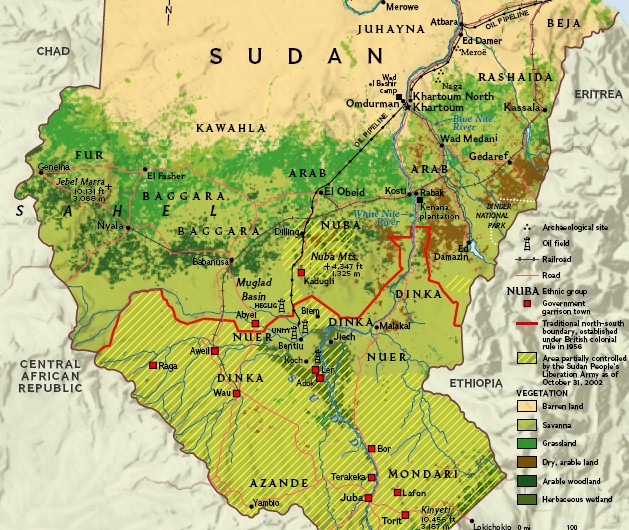 |
from the website
of the National Geographic
http://ngm.nationalgeographic .com/ngm/0302/feature2/ images/mp_download.2.pdf |
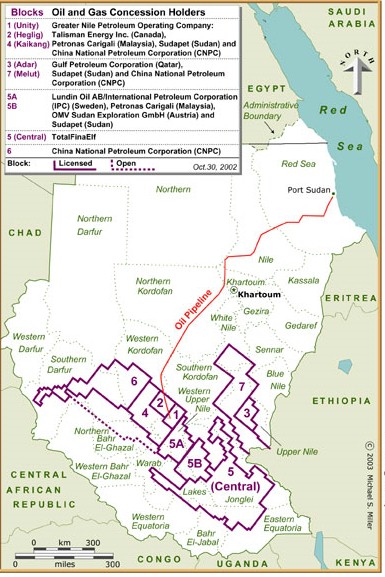 |
a map showing
the location of the oil business in Sudan
original at
(2010) |
| Talisman
Energy |
Essentially,
the company Talisman Energy of Calgary has been accused of spending money
in the country of Sudan, to pay for military forces to protect the region
in which it has been operating. Apparently, according to various newspaper
stories, these forces have been accused of murdering innocent people in
circumstances unrelated to security of the property needed to be guarded.
Talisman "...began operating in Sudan where United Nations observers estimate
that two million people have died in fighting since 1983, and where allegations
of slavery and genocide are rampant."
www.vitrade.com/editorials/991122_profit_in_sudan.htm Talisman, is no longer in involved in oil exploration and development in Sudan. In the late 1990’s and early millennium years the Alberta-based company was accused of developing oil exploration in the Sudan knowing that the country was in the middle of a civil war. A resource extraction business that intends to successfully operate in a country that has been, at times, referred to as the poorest country on earth and one of the most dangerous countries in Africa, will undoubtedly face many difficult challenges. One of the toughest challenges for Talisman was developing its oil exploration program and oil refinery operations in a region that had open armed conflict between religious and ethnic groups. The Sudan, since the 1980’s, and up to the time of printing this text, has seen violent conflict between the Muslims and Christians. The Muslims hold a majority in the north of the country, and control the government and military forces. The Christians are concentrated in the south and, as a consequence of extreme violence over many years, have ended up in crowded arid refugee camps along the southern and western borders. Along the western border of Sudan is Chad, a country described by various NGO’s as having the lowest GNP per capita on the planet and certainly not in a position to supply food and support to the refugees fleeing the conflict. Depending on your sources, (www.amnesty.org says 2 million dead, 6 million refugees) hundreds of thousands of Christians have been displaced from their homes and large numbers have been killed violently by nomadic bands of lawless criminals – a sad tragedy that goes unchecked by the Sudanese government despite growing international pressure. A lot of that pressure was put on Talisman by activists who claimed that by operating in the Sudan and openly courting the government’s favour for developing their oil projects, Talisman must be, by association, complicit in the crimes against humanity that are increasingly reported in the global media. WTGR ©McGraw-Hill Ryerson 2006 |
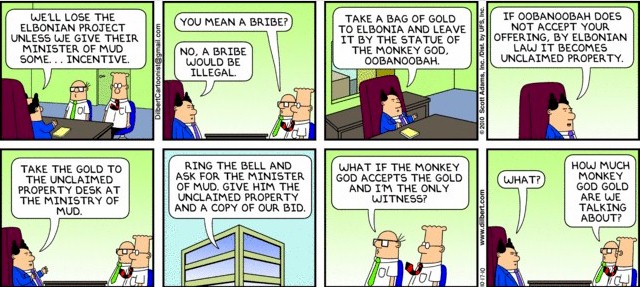
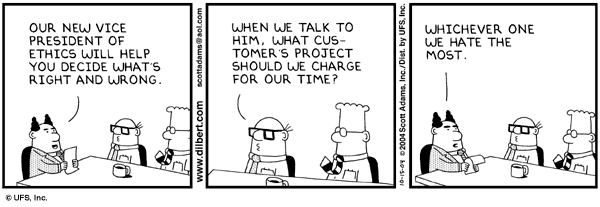
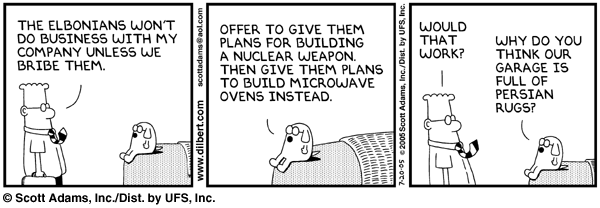
While this Dilbert cartoon
is funny, it raises a common problem facing people providing the bribe
- namely how to get the
money (or gold, or diamonds [preferrable]) to the corrupt decision maker
| Talisman
Energy |
|
| Talisman
Energy Why? |
Why
did Talisman operate in the Sudan, and pay money to the Sudanese government,
who then used that money to support armed strife against another ethnic
group in the country? Ed Broadbent , former leader of the federal NDP Party,
speaking at the 2003 CES Conference, said “… global competition led Canadian
business executives to do outside of Canada what they could not do at home.
In developing countries this has led in the past to exploitative labour
policies, bribery of public officials, and the degradation of the environment.
In short decisions about appropriate behaviour in the corporate sector,
as with other decisions, is shaped by the market.” The intensity of the
competitive market outside Canada has created a situation where some companies
feel obliged to do battle with a blind eye to corporate behaviour that
would not be tolerated in their home nation.
Jim Buckee, president and chief executive officer of Talisman seems to absolve himself of any responsibility "I don't doubt there's nasty things going on on all sides," he has said about the civil war in Sudan, a country in which his company has a 25 per cent share in a vast new oil field. "But we are a business, and we are not in politics, and we can only affect things within our sphere of influence." A number
of media reports say "....the war, which began in 1983, may well have ended
by now if it weren't for revenues being collected from the government’s
oil production. Money collected from oil revenues has allowed the government
to purchase more sophisticated weaponry and thus prolong the war and increase
the devastation of the people of South Sudan. "
The point being that if Talisman of Canada wasn't operating in the country, and paying the Sudanese government, the government would have less money to fight its civil war. WTGR ©McGraw-Hill Ryerson 2006 |
| Talisman
Energy |
|
| Talisman
Energy the
|
Why is the situation in the Sudan and other African countries so problematic? One way of seeking a perspective might be to look at the context of the political environment and the inability to develop rules and regulations across multiple boundaries. Africa is home to an estimated 800 million people spread out into 54 different countries, by contrast, China (PRC) is one country of 1.4 billion people living under one set of laws. When rules and regulations are so different among countries in one geographic region, it is sometimes possible for outsiders to create exploitative situations that are unethical. As this text goes to print, a formal investigation into allegations of war crimes in Sudan's Darfur region is being planned for the International Criminal Court in The Hague. As for the refugees, the first week of June 2005 say the Red Cross beginning airlifts of food to refugees in the Darfur region of Sudan. Previously humanitarian organizations could not bring in food to the refugees because the trucks in the aid convoys were violently attacked. Despite these promising developments, progress is slow and the government in Khartoum [June 2005] is thwarting aid workers by arresting them if they talk to foreign media reporters about the conditions they are witness to. |
| Sudan
Political
|
As
reported at length in the November 2010 issue of National Geographic,
http://ngm.nationalgeographic.com/static-legacy/ngm/0302/feature2/ the people of southern Sudan will vote on whether to secede from the north and form a fully independent country. |
|
CASE STUDY
3
|
SNC-LAVALIN
Canadian engineering and construction firm based in Quebec - projects in 100+ countries |
| SNC-Lavalin
Libya |
"...two SNC-Lavalin executives have been sacked in apparent connection with the affair. The company is also probing $35-million worth of unexplained construction project payments, although it hasn’t said whether they are connected to Gadha? or Libya. Investors are nervous, sending shares down by more than 25 per cent over the past month. Some are even seeking a class action lawsuit that accuses senior management of being “engaged in unlawful activities in Libya.” Mario
Beauregard who wrote the article for Maclean's explains
|
| SNC-Lavalin
Bangladesh |
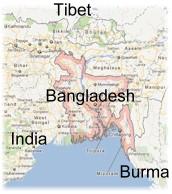
The
Financial Post reported Feb 28th 2012
http://business.financialpost.com/2012/02/28/snc-lavalin-posts-profit-warning/ |
|
CASE STUDY
4
|
SPONSORSHIP SCANDAL
Federal money given to Quebec during the vote on separation |
| Perceptions of Bribery effecting Canadian Exporters | The Sponsorship
Scandal
In early 2005 almost every newspaper and magazine and radio and TV outlet was carrying stories about corruption related to the findings of the Gomery Inquiry. Justic Gomery was charged with investigating the events surrounding the spending of $100 million of tax payer dollars on ad campaigns and events in Quebec during the time of the separation referendum. The "Sponsorship Scandal", as it is now called, broke in 2002 when the federal Auditor General recommended that the RCMP investigate how millions in federal advertising contracts were distributed to Quebec based agencies and consulting firms that were supposed to use the money to create advertising and publicity to convince Quebec votes to reject separatism and support federalism. In June 2005 the media focused on events such as advertising executives pleading guilty to fraud charges and courtroom tales of how certain agencies, with Liberal Party ties, pocketed millions, for doing very little work. WTGR ©McGraw-Hill Ryerson 2006 |
| Why
Important |
Why would students
of international business be worried about these revelations being recounted
in the media and throughout the world?
Firstly, Canada is a trading nation. |
| Canadian Exporters | International
Business leads our economy. Our ability to be competitive exporters,
and reliable importers, depends on several perceptions held by international
customers and suppliers, and certain influences in the economic environment.
As a country whihc has been nobly regarded in many nations for the peacekeeping activities of our Armed Forces, combined with the comparitively polite way that Canadian tourists behave abroad, Canada has enjoyed favourable and confident opinion by nations around the globe. Political scandals, based on unethical dealings, raise the concern of international business people who are dealing with Canada. WTGR ©McGraw-Hill Ryerson 2006 |
| Currency
Exchange Rate |
Currency
Problems
If the Canadian government appears to have difficulty running the country (ie. passing legislation), as we saw in the 4th week in May 2005 when an alliance of the Conservatives and the Bloc forced a tie in the House of Commons, on an important budget bill, it causes int'l currency traders to be concerned. Currency traders, who are concerned, [May 2005] will sell their Canadian dollars, causing the value of the dollar to fall. Upon announcement that the buget was passed (since the Speaker of the House broke the tie) the Canadian dollar rose on world currency markets the next day. WTGR ©McGraw-Hill Ryerson 2006 |
| Bonds | Bond Market
To explain, in overly simplistic terms, Canada, like many OECD countries, raises money for the federal government by floating bonds on the foreign debt markets. This money has a significant role to play in how the government budget can be forecast, and determines to what extent the government spends on education, health care, foreign aid, etc. If the foreign investors lose some confidence in the ability of the Canadian government to govern, which in turn effects the chance the bonds might not be payable on maturity [in the extreme scenario], then the price of the bonds falls and this negatively effects the ability of the government to count on these amounts when they are forecasting the national revenue. |
|
CASE STUDY
5
Approaches to Corporate Social Responsbility |
TOYOTA
Accelerator problems led to accidents |
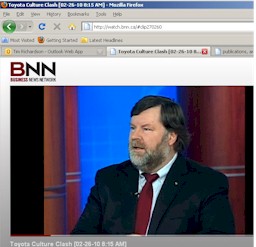 |
Culture clash between
Toyota execs and U.S. law enforcement
clip of Prof. Richardson interviewed on BNN News about the public remarks made by the Japanese president of Toyota in the U.S. about the Toyota cars that had problems with the accelerator pedals sticking, and some subsequent fatal crashes which are alleged to have happened as a result. Toyota's initial "reaction" was said to be a classic case of the Obstructionist Stance in that (as reported by the media) they did not initially co-operate with U.S. authorities and in fact the "Event Data Recorders" were encrypted so experts were not able to reconstruct the accident details. |
.
|
CASE STUDY
6
International pressure on an unethical situation |
SOUTH AFRICA
- APARTHEID
Canada's role in pressuring South Africa to end Apartheid |
| Ethics
Canadian
46664
|
Canada, as an
influential member of the British Commonwealth, played a role in contributing
to worldwide pressure on the South African government to drop Apartheid.
Canadian politicians used their influence to affect political and economic
sanctions on the government of South Africa. Canadian Foreign Affairs
Minister Don Jamieson established in 1977 measures which ended “… government
support for commercial activities in South Africa, establishing a voluntary
"code of ethics" for Canadian companies active in South Africa, and required
visas for South African visitors.”
Through the 1980’s and early 1990’s Canadian government officials at the highest levels, business people and senior Canadian clergy, of several denominations, continued to advocate loudly for the end of Apartheid and played a role in facilitating the all-race elections in 1994. Direct support for South Africans included special circumstances allowing mixed race couples (who were in danger for their lives since inter-racial relationships were outlawed in South Africa) to immigrate to Canada, along with other Black Africans and Indian-South Africans who were at risk by virtue of their political activities. South African politicians were very angered at Canada’s growing influence and countered with allegations that Canada should look at the condition of Native tribes on the reserve system in Canada, before moralizing about other country’s circumstances. WTGR ©McGraw-Hill Ryerson 2006 |
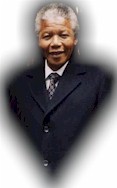 |
In the end,
Apartheid was crushed, and just four months after Nelson Mandela (Madiba)
1 was released from prison, he visited Canada in 1990 and made several
speeches in which he thanked Canadians for their role. In a speech to the
Canadian parliament, Mandela expressed appreciation, and encouraged Canadians
to maintain economic sanctions against South Africa, which was enforced
until Mandela was elected president in May 1994 . In 1998, on his second
visit to Canada, Nelson Mandela became the first foreign leader to be awarded
the Order of Canada – a distinguished honour that has never been repeated.
Students can hear some of the old news clips with speeches during this era on the CBC archives site at http://archives.cbc.ca/IDD-1-71-703/conflict_war/apartheid/ |
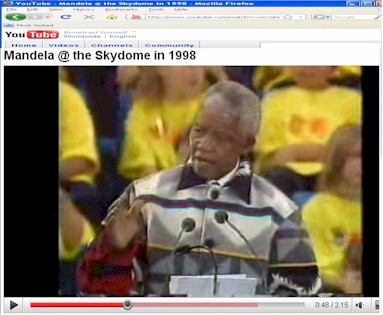 |
listen to what Mandela says about Canada's contribution to pressuring South Africa to repeal Apartheid |
|
CASE STUDY
7
|
NATIONAL GOVERNMENT LEADERS |
| National
Government Leaders |
One would think
that elected leaders of national governments (prime ministers and presidents)
of OECD countries would be under such scrutiny that
Suharto - Indonesia
|
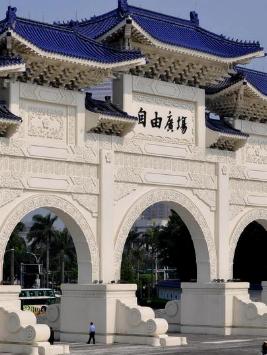
gate to the Chiang Kai-Shek Memorial, in Taipei, Taiwan, photo by WTG Richardson |
Ivan W. in IBM600
at Seneca emailed in June 2013 to note that
While I was browsing the internet and searching for articles of unethical situations I stumbled upon an article involved with bribery in Taiwan. The former president of Taiwan from 2000-2008 (Chen Shui-Bian) was convicted of 2 charges of bribery and was serving life in prison but the sentance has been reduced to 19 years. What he did was launder fifteen million US - he wired twenty one million in campaign funds to accounts around the world include Singapore, Switzerland and the Clayman islands. In May 2008, he was prohibted from leaving the nation due to the allegations of curruption and abuse of authority. References
& further details:
WTGR replies - yes Ivan, this is an interestiing story because it is one of the rare examples where a national leader of a country (that has a good economy) gets caught in an unethical situation, AND is convicted, AND goes to jail. |
| Bribery
in Int'l Business |
"Transnational
bribery consists in offering or giving of money, valuable goods or other
benefits as favors, promises or advantages to foreign government's official
for procuring that official do or omit any action addressed to influence
on economic or business transaction which has relationship with his public
function."
Most countries have in their domestic law stipulation that it is an offence to bribe their own public officials. Notwithstanding, only in the Interamerican Convention Against Corruption, in 1996, and in the OECD Convention, in 1997, did nations assume the commitment to punish bribery of foreign officials. |
| KEY POINTS | The
point here is that until recently, it was against the law to bribe people
in your own country, but there was nothing in Canadian law to make it illegal
to bribe someone in another country - the only thing that stops you from
bribing someone else in another country is the bad publicity you may receive
if you are caught, and the media find out.
WTGR |
| Bribery
in Int'l Business |
Why
do we care about bribery - is it not a "victimless crime" - actually, there
are severe consequences.
"In
the early 1990s, scandals involving extortion and bribery were a significant
factor in toppling governments in many parts of the world. This situation,
if allowed to continue, could undermine the most promising development
of the post Cold-war era, i.e., the spread of democratic governments and
of market economies worldwide."
|
| Bribery
effect
|
|
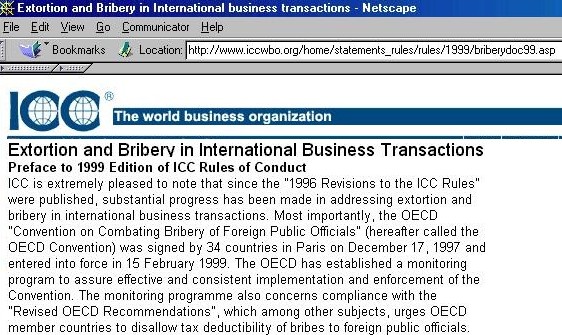 |
This screen capture from the Int'l Chamber of Commerce shows an example of how international NGOs are setting themselves up as "rule setters" for issues related to ethics and bribery |
| NGOs like the ICC have no
jurisdiction within which they can enforce recommendations or regulations
about ethics, they can only suggest that individual countries adopt certain
standards and if they wish to do so, NGOs like the ICC are eager to make
suggestions as to how that can be done.
WTGR ICC says "...national governments must strengthen their enforcement of laws prohibiting the solicitation and receipt of bribes, as well as the payment of bribes"
|
| International
price fixing  |
Diamonds
DeBeers, a giant South African diamond supplier, which has vertical and horizontal monopoly over much of the diamond mining and diamond distribution industry, has agreed to 1/4 of a billion dollars ($250 M) to settle an outstanding lawsuit in the U.S. Many years ago, DeBeers was sued by American jewellery retailers, manufactuers, and other people in the business, who claimed that DeBeers had been guilty of fixing prices - thus artificially inflating the price of diamonds and diamond jewellery. DeBeers did not settle this giant lawsuit - instead, they avoided it by refusing to do direct business in the U.S. Now that the U.S. diamond market has become very large (55% of global retail sales), DeBeers wants into the U.S. again and in order to do that they agreed to settle this old lawsuit. The U.S. judge reviewing the case approved the conditions based on DeBeers agreeing to comply with U.S. anti-trust laws. This lawsuit settlement follows an action in 2004 in which DeBeers pleaded guilty to fixing prices of industrial diamonds and agreed to a $10 M USD fine |
| Conflict
diamonds |
Conflict
diamonds - AKA Blood Diamonds
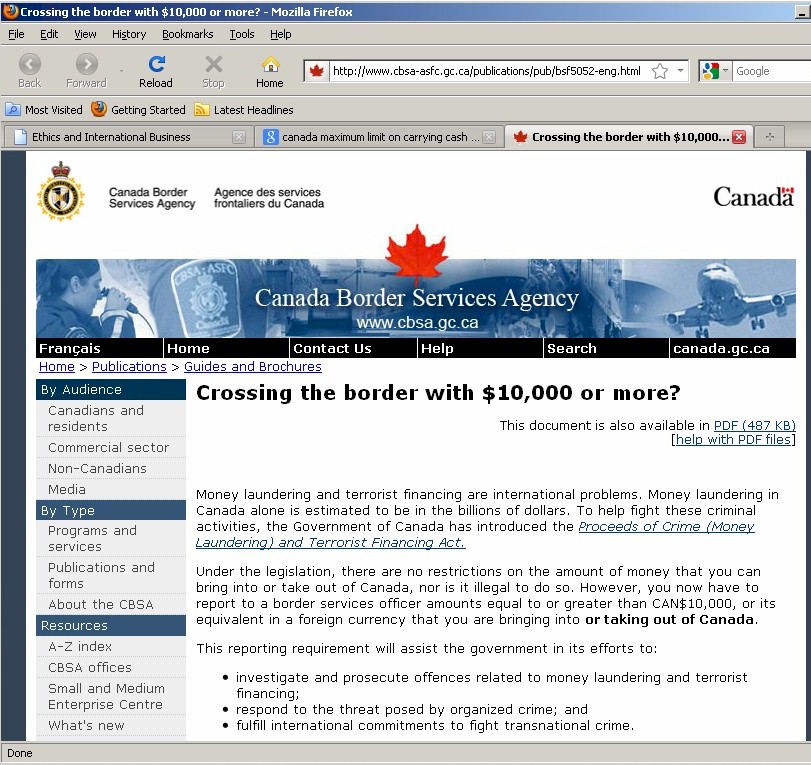
Why are diamonds used as a "unit of currency" - which has contributed to an unethical trade in diamonds from "conflict regions"? 1. One of the tactics to control the international drug trafficking trade, and a tool to limit terrorism financing, is to put regulations on the amount of cash that can be physically carried by a person crossing the border. In Canada this limit is $10,000.
If you are carrying more than $10,000 crossing in to, or leaving Canada,
you have to declare this to officials at the border.
2. For a "bad guy", to carry $ 1 million in cash, is now a problem because he (she) would have to answer questions about how they got the money and where are they taking it and for what purpose.
|
 |
Wanna know what a million
dollars looks like in hundred bills?
If you wanna "run away" with this pile, just imagine trying to swiftly carry a pile of half a dozen full-size textbooks and that will give you an idea of the physical mass you have to move. By comparison, a million dollars of diamonds can easily fit in the palm of a small women's hand. The pic to the left, of U.S.
hundred dollar bills comes from
|
Conflict
diamonds
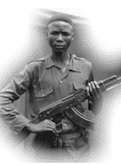
photo by Giacomo Pirozzi for UNICEF |
Conflict
diamonds - AKA Blood Diamonds
What is a conflict diamond?
"During the past decade, more than 6,500,000 people from Sierra Leone, Angola, and the Democratic Republic of the Congo have been driven from their homes by wars waged in large part for control of diamond mining areas. A million of these are refugees eking out a miserable existence in neighboring countries, and tens of thousands have fled to the United States. Approximately 3,700,000 people have died during these wars." from the `Clean Diamond Trade Act 2003', U.S. Congress |
| Conflict diamonds | Kimberley
Process for Rough Diamonds
The Kimberley Process was initiated by South Africa in May 2000 to develop an international certification scheme for rough diamonds in order to help prevent conflict diamonds from entering legitimate markets. Conflict diamonds originate in areas controlled by rebel groups and are often used to fund military action that targets governments." from www.nrcan.gc.ca/mms/diam/index_e.htm
How can a conflict diamond
be distinguished from a legitimate diamond?
|
| Canada's
role in the diamond market
|
Diamonds
www.nrcan.gc.ca/mms/diam/index_e.htm "Canada’s diamond industry has now become an industry worth more than $2.0 billion with all indicators pointing to potential for future growth. Canadian diamond production in 2003 was about 11.6 million carats and in 2004 was 12.6 million carats." We'll be No.#
3 worldwide
|
| Canada's
role in the diamond market |
Diamonds
- the Polar Bear Logo
|
| Canada's
role in the diamond market |
Diamonds
- the Polar Bear Logo
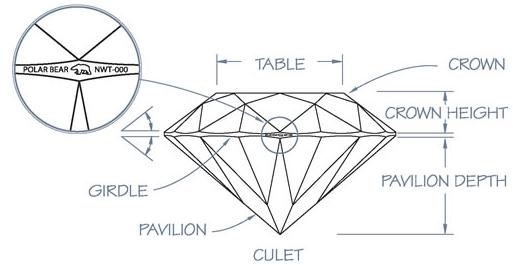 |
| Canada's
role in the diamond market
|
Diamonds
- our global share
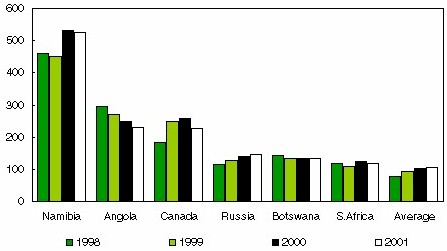
Student Tushar C. in Feb
2011 emailed to say "I came across your section
on diamonds and the fact that "Canada
has become the world's third largest producer of diamonds in the world"
stood out to me. As a result, I went on to Stats Canada to investigate
further and came across something even more interesting. According to Stats
Canada, not only is Canada third in the world in terms of production, but
the average price per carat for a Canadian-mined diamond is also third
(as of 2001), only behind Namibia and Angola. This is due to the
fact that our rough diamonds are very high in quality, which is measured
based on size, clarity, and colour. This has provided many opportunities
for employment in the under utilized Northwest Territories, which is great
for Canada. I found this chart as well"
|
| Canada's
role in the diamond market |
Diamonds
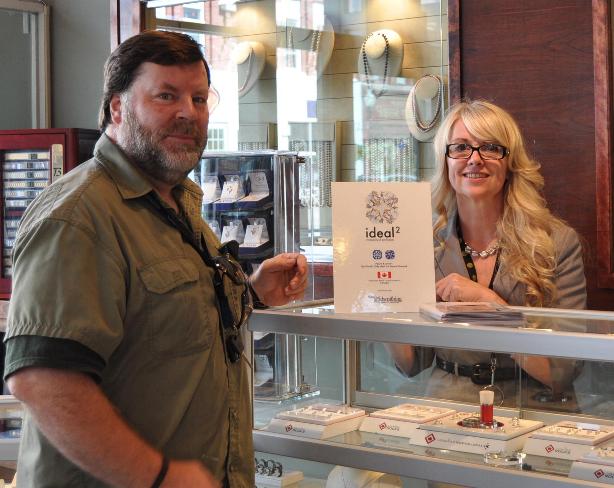
- merchants using the Canadian identifier
|
| Bribery
- when it was just intended as a "tip" |
the original story in on
the newswire at
In emailing back and forth
with Sean, I asked if this situation was maybe because she was from a certain
place were such things might be "culturally acceptable".
|
| Bribery
driving exam |
Another
story related to bribing driving examiners - seems to be a global thing
"I didn't get a chance to share my experience with you in class last week as we were discussing bribery [so sent this email]. I have personally been involved in bribery without my knowledge." WTGR
"When we got back to the parking lot, I was told that I had passed. Immediately, I asked my driving school teacher how this was so. He told me that the school had already bribed on my behalf so the actual test was just for show." |
| Bribery
- foreigners using bribery in Asia |
"I just wanted to touch on the point someone mentioned about how the Western countries were once "corrupted" (well they still are) and that we should not criticize China for doing so because they are a developing country. Although I understand and accept the way people do business in corrupted countries, it does not mean I agree with it. I continue to think that there should be pressure to disapprove these activities. Most of the time, businesses will only change if they are forced to change."
|
| Bribery
- does it include giving gifts |
WTGR
responds
I think the key point to determining if the VALUE of the gift is high enough to be considered a bribe, is to compare it to gifts given in corporate situations in which there is no previous, or subsequent business exchanged. |
| Bribing
Business
|
An
example of the costs ssociated with having to bribe officials in Pakistan
WTGR explains "I thought Mobashar's comments were very interested because it provided a specific example of how the cost of bribery can negatively effect the productivity of a business" |
| Bribing
Business
|
WTGR
responds
The article collaborates your points about dishonest policeman by citing additional examples of corrupt cops asking for bribes. The Toronto Star article made a point of saying that "India's Central Bureau of Investigation is poorly trained to ferret out large-scale corruption and is disinclined to pursue small-scale crimes". One
thing I found interesting is that young college and university students
in India are speaking out strongly on the issue. "Our country
is sick with corruption," said one student interviewed
for the article.
|
| Bribing
Business
|
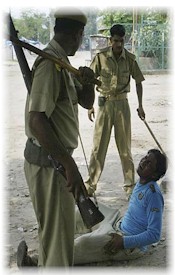
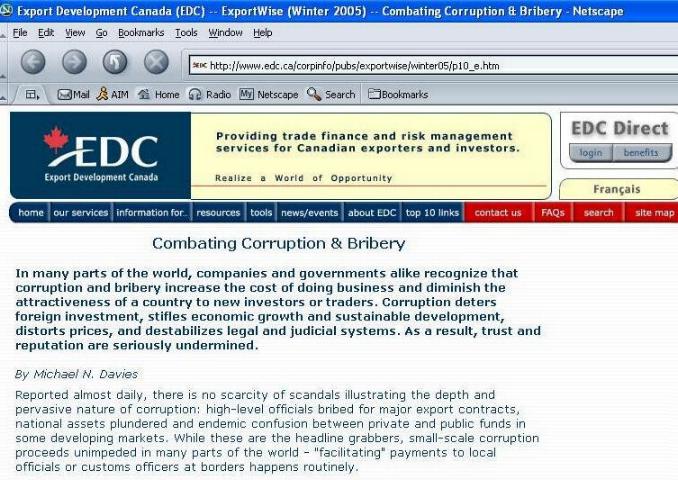
As
a result of the comments made by student Neha R., a a significant number
of students at Seneca and UofT emailed me to provide their own stories
and experiences with unethical behaviour by police in India.
One of the typical stories is shown below.
|
.
.
In June 2005 Prof. Richardson
wrote the "Canadianized" version of a chapter on Ethics for the an International
Business textbook published by McGraw-Hill Ryerson.
Some of the material in
this unit comes from the writing Richardson did for that Ethics chapter
and is © McGraw-Hill
Ryerson 2006.
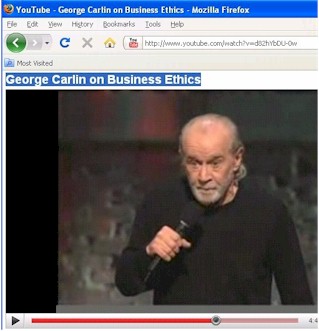 |
George Carlin on Business
Ethics & Politics
youtube.com/watch?v=d82hYbDU-0w (link working March 2012) "Explicit" language
- but if you don't mind the "language", Carlin makes several interesting points, through his humour, about how ethics in business is twisted to serve the corporate goal and objectives
|
1. Madiba
is the name of the clan of which Nelson Mandela is a member. A clan name
is much more important than a surname as it refers to the ancestor from
which a person is descended. Madiba was the name of a Thembu chief who
ruled in the Transkei in the 18th century and the Madiba clan is still
very important in the region. It is considered very polite to use someone's
clan name.
.
|
|
CONTACT I MAIN PAGE I NEWS GALLERY I E-BIZ SHORTCUTS I INT'L BIZ SHORTCUTS I MKTG?BUSINESS SHORTCUTS I TEACHING SCHEDULE |
| . | |
MISTAKES
ITEXTS
USED I
IMAGES
I RANK
IDISCLAIMER
I STUDENT
CONTRIBUTORS I FORMER
STUDENTS I PUBLICATIONS
I TIPS
I  |
|
| . |
Prof. W. Tim G.
Richardson © www.witiger.com